
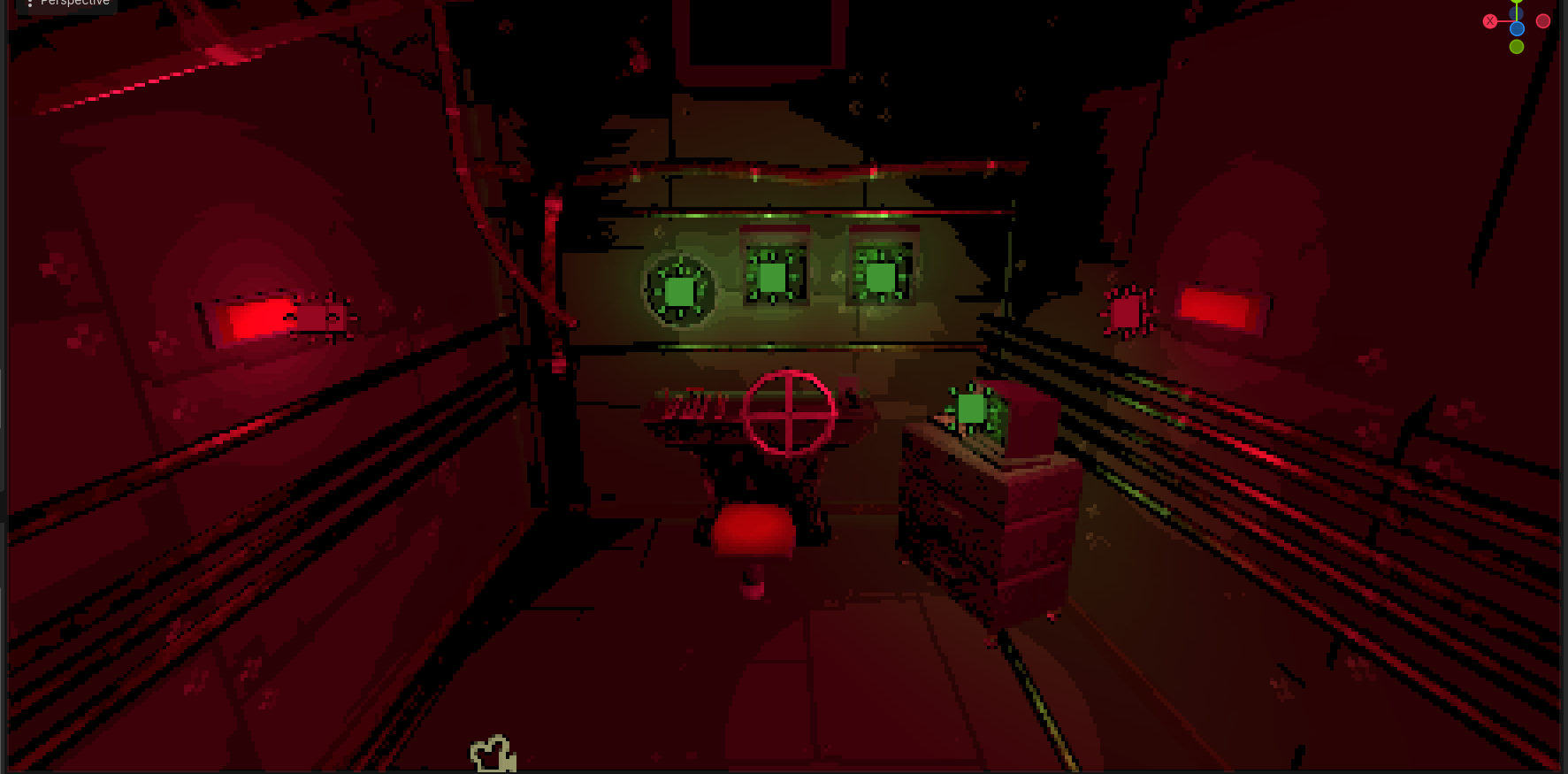
SHUTTER started as a sudden strike of inspiration I had while watching my friends play aquatic horror games. I was suddenly reminded of a type of sea creature called a “siphonophore”. From there the ideas flowed into a night's worth of passion into creating a sci-fi world, all from the idea of one terrifying creature.
After a single night I had a design document comprised of five pages, covering worldbuilding, mechanics, design, and story intentions and from there I further developed the specifics of my project.
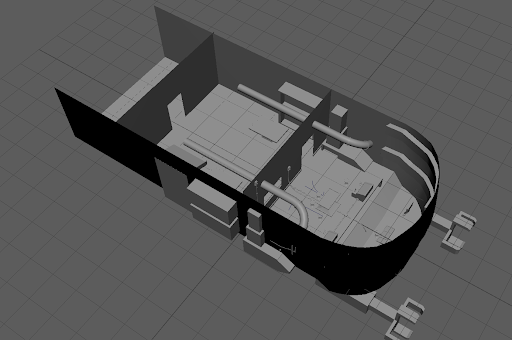
Initially I set my goals loosely, and started by throwing assets I thought would work well together down, in hopes of visualizing my world beyond just concept sketches. I quickly learned that by making a wide open map, I lost horror potential and lacked anything to evoke a sense of fear. I reshifted my focus and inspiration to take ideas from claustrophobic environments adjacent with my aesthetic.
The chosen aesthetic became something I dubbed “Analogue Sci-Fi” where every aspect of technology is physically controlled by hand, and from there so many gameplay ideas flowed in, and I was able to recreate a concept of what I wanted to achieve.
In redesigning my main room I discovered something that drove my storywriting and mechanics forwards, isolation. The planned gameplay features choices that affect the outcome of your companion’s fates and the isolation the player faces amplifies the danger for the rest of the crew.

Godot was a struggle at first, it was a completely new engine that functioned neither like Unity nor Unreal, but I was able to learn it within a span of a few days.
The primary struggles were object instances, material setups and shaders. The easiest(and arguably the nicest feeling process) was lighting, godot lighting systems are incredibly performance light and have an incredible look.
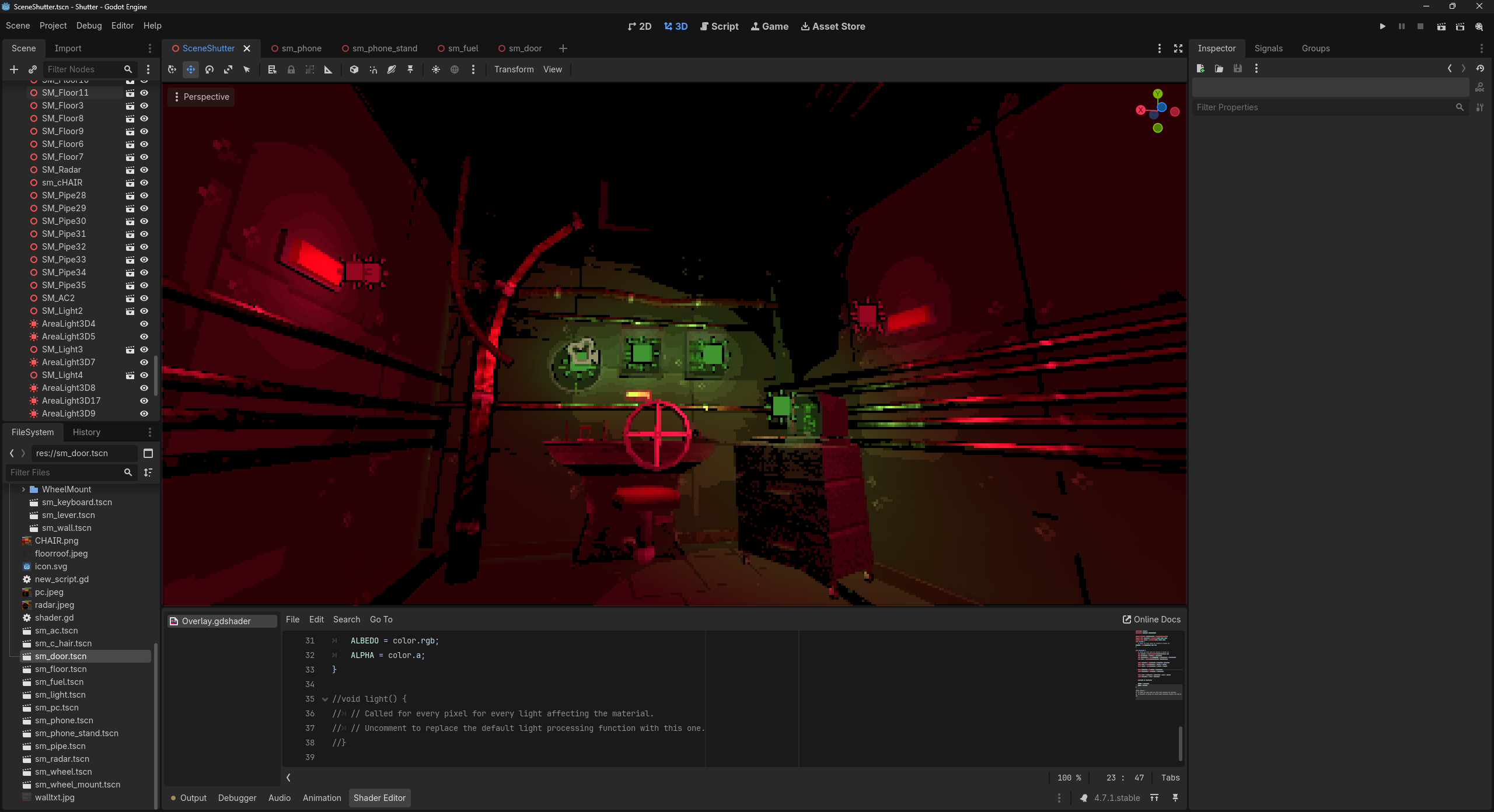
My first major struggle in engine was preparing a shader to pixelate and posterize my scene, at first I struggled to find guides and manuals that pointed to programming a shader, and then I struggled to properly code an adjustable shader with a satisfying look, ultimately I went with one that sharpened colors and darkened the overall scene.
The result made objects with metallic/low roughness settings pop incredibly well.
Overall I’m satisfied with the current state of the project and I have the intention to further develop this into a standalone game.